Is gout impacting your daily life?
We’re conducting research studies to evaluate the effectiveness of a potential gout medication. If you’ve been diagnosed with gout and meet the study criteria, you may be eligible to participate.
See if you qualifyGout flares are not only painful but also can be very frustrating. A lot of people who suffer from gout still struggle with symptoms even when on medication such as allopurinol. The JEWEL Program is evaluating the effectiveness of the study drug, dotinurad, compared to other gout medicine in lowering serum uric acid (the waste product that builds up in the blood, leading to gout symptoms).
Dotinurad is an oral medication taken once daily. It has already been studied in clinical trials in Japan and China in individuals with gout and is approved for use in those countries. The JEWEL Program will be conducted in the United States and Europe.
The JEWEL Program offers the following studies for people with different forms of gout:
- The RUBY Study: For people with gout who regularly take the same dose of their usual gout medicine, allopurinol.
Click here for an overview of the Ruby study. - The TOPAZ Study (US ONLY): For people with tophaceous gout who regularly take the same dose of their usual gout medicine, allopurinol. Tophaceous gout is a severe form of gout that is chronic and harder to control. People with this form of gout develop “tophi,” which are hard lumps of uric acid crystals under the skin.
Click here for an overview of the Topaz study. - The AMETHYST Study (US ONLY): For people with gout who still have flare-ups but cannot take allopurinol or febuxostat, or for whom uricase therapy did not help.
You can learn more about each study in the JEWEL program by visiting ClinicalTrials.gov:
Participants will receive:

The study drug, dotinurad, or other study-supplied gout medicine

Medication to prevent gout flares

Monitoring by the study team throughout the study

Reimbursement for reasonable study-related expenses (travel and meals)

You may be able to join the RUBY or TOPAZ Studies if you:
- Are 18 to 75 years old (male or female)
- Have been diagnosed with gout for at least 1 year
- Are currently taking allopurinol
- For TOPAZ specifically: Have one or more visible tophi on the hands/wrists or feet/ankles. Tophi are lumps caused by gout where uric acid crystals have physically built up under your skin and around your joints.
- For RUBY specifically: Have had two or more gout flares in the past year
You will need to meet other requirements to join the RUBY and TOPAZ Studies. This includes lab tests on your blood. There is no charge for these tests. Please contact us for details.
Each of the clinical studies in the JEWEL Program are different. The number of study visits, the treatment plans, tests, and assessments are all specific to the clinical study you are involved in. Each study is divided into the following periods:
Screening Period: The study doctor conducts a series of tests and assessments to confirm you match the requirements for joining the study. Patients who qualify are then enrolled in the study if they agree to take part and sign an Informed Consent Form. Informed Consent Forms explain the study in detail, as well as a patient’s rights before, during, and after the study.
Treatment Period: Participants will be assigned to receive either their usual gout medication or dotinurad. The study doctor will explain the treatment plan in detail prior to the start of the study.
Follow-up Period: After completing the treatment period, study participants will continue to have a series of study visits, in person or remotely, where their condition will be watched closely.
Global Trial Locations
Information About the RUBY and TOPAZ Studies


For Patients Diagnosed With Gout
RUBY Study participation involves:
Screening period (35 days): You will answer questions about your health and have tests and procedures done to see if the study is right for you.
Treatment period (64 weeks): Eligible participants begin treatment and are assigned randomly (like picking a number from a hat) to 1 of 3 groups:
- Group 1: Daily standard-of-care gout medication (allopurinol) at the same dose every day through week 64
- Group 2: Daily dotinurad, starting at the lower dose (1 mg) for weeks 1 through 4, and then increasing to 2 mg maximum through week 64
- Group 3: Daily dotinurad, starting at 1 mg for weeks 1 through 4, increasing to 2 mg through week 12, and then taking 4 mg through week 64
There is a 3 out of 5 (60%) chance that you will be selected to take dotinurad and a 2 out of 5 (40%) chance that you will remain on your current treatment (allopurinol) for gout. The study is double-blinded, which means neither you nor the study doctor will know which is your assigned group.
You will continue to take your medications (nonsteroidal anti-inflammatory drugs, colchicine, or other standard gout medicine) to prevent gout flares.
Follow-up period (4 weeks): Participants are checked for the effectiveness of treatment and any side effects.
You will be asked to visit the study center 18 times and have 5 phone calls with the study center.
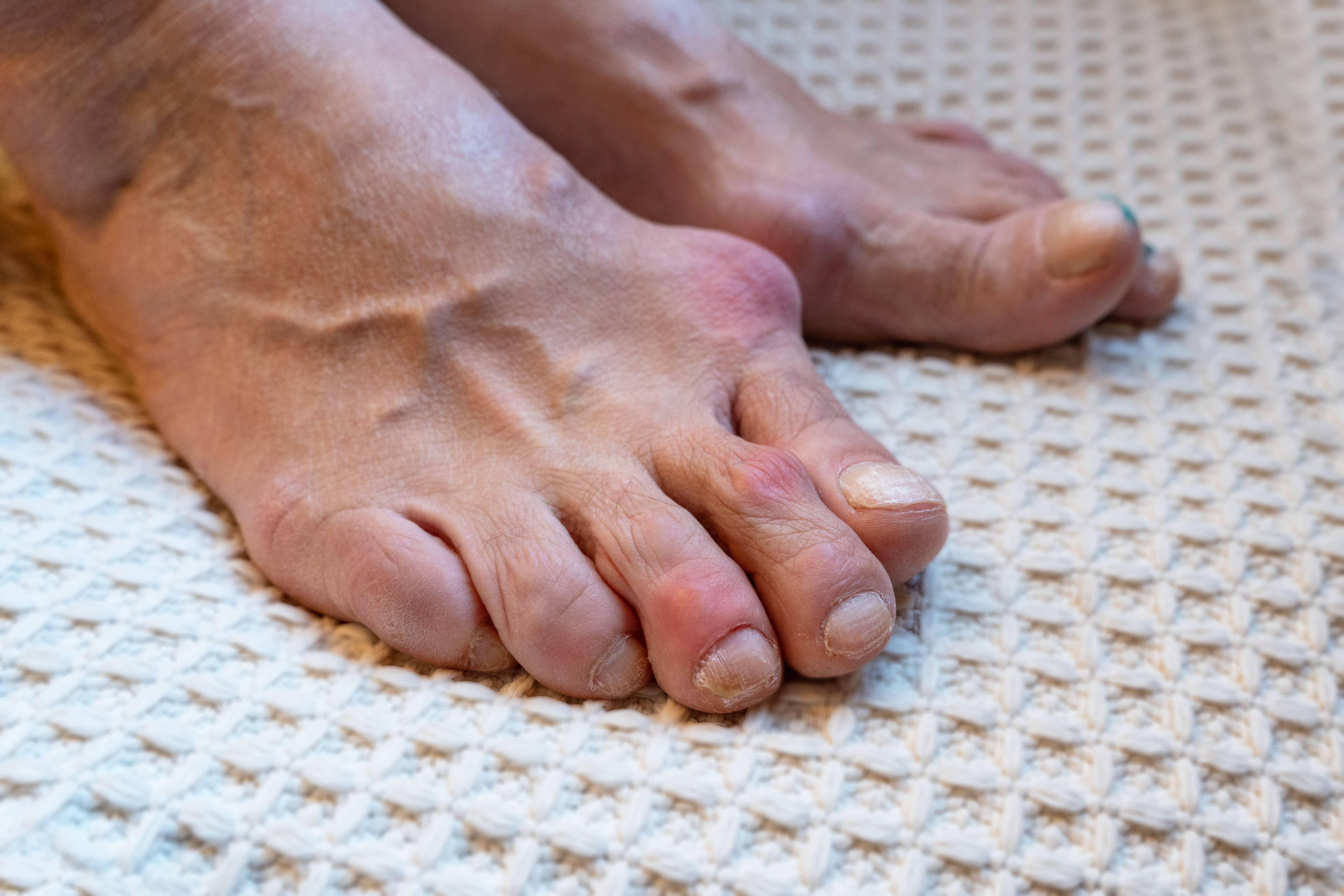

For Patients Diagnosed With Tophaceous Gout
TOPAZ Study participation involves:
Screening Period (35 days): You will answer questions about your health and have tests and procedures done to see if the study is right for you.
Treatment period (76 weeks): Eligible participants begin treatment and are assigned randomly (as if by flipping a coin), to 1 of 2 groups:
- Group 1: Daily standard-of-care gout medicine (allopurinol) at the same dose every day through week 76
- Group 2: Daily dotinurad, starting with 1 mg for the first 4 weeks, then dotinurad 2 mg for the next 8 weeks, and increasing to 4 mg after week 12 up until week 76
There is a 50% chance that you will be selected to take dotinurad and a 50% chance that you will remain on your standard treatment for gout (allopurinol). The study is double-blinded, which means neither you nor the study doctor will know which is your assigned group.
Follow-up period (4 weeks after last study dose): Participants will be checked for effectiveness of the treatment and any side effects.
You will be asked to visit the study center 19 times and have 7 phone calls with the study center.
Clinical research studies (also called clinical trials) are carefully supervised research that is done before an investigational drug becomes available to the public.
- Clinical studies follow specific rules to protect the safety, rights, well-being, and privacy of participants.
- The results help doctors and researchers decide if a medication or product is safe and should be available to patients.
- Clinical studies are an important way to develop new medical treatments to improve patient care.
What is Gout?
Gout happens when too much uric acid builds up in the body and forms sharp crystals in the joints, causing sudden, intense attacks of pain called flares. Gout symptoms can vary over time. Some people experience occasional flares, while others may have more frequent or ongoing symptoms.
If you’ve been living with gout for a while, you may have noticed hard knots and bumps under your skin. These can occur in many parts of the body but are common in the hands and feet. The hard knots and bumps are called tophi (one is a tophus). You’ll also see the term “tophaceous gout” used, which basically means gout that has progressed to the point where uric acid crystals have physically built up under your skin and around your joints.
Frequently asked questions
Yes. The JEWEL studies will allow you to maintain treatment that helps prevent gout flares. So, if you were taking a medication to prevent gout flares such as colchicine or a nonsteroidal anti-inflammatory drug (NSAID) you will continue to take that medication throughout the study.
Yes. In order to qualify you must be taking a stable dose of allopurinol.
Both the RUBY and TOPAZ Studies are double-blinded. That means that during the study period, neither you nor the study doctor will know whether you are taking dotinurad or your usual gout medicine. Clinical trials often automatically blind patients and clinicians from knowing which medication they are taking to help determine that the data are not biased and are therefore more reliable. In contrast, unblinded studies allow you and the study doctor to know which treatment you are taking.
Yes, the AMETHYST Study is for people with gout who still have flare-ups but cannot take allopurinol or febuxostat or for whom intravenous uricase treatment (e.g. Krystexxa) did not help.
A clinical research study (also called a clinical trial) is carefully supervised, regulated research that is done before a new drug (referred to as an ’investigational’ drug) becomes available to the public. Clinical studies follow strict rules to protect the safety, rights, well-being, and privacy of participants. When the results are ready, doctors and governmental medicine authorities(e.g. FDA in US, EMA in Europe) decide if a product is safe and should be available to patients. Medical studies are how new treatments are safely and responsibly developed before they can be used in everyday care
All study volunteers are always closely watched by clinic staff and the medical team to ensure their safety.
A gout research study may be an option for adults who have been diagnosed with gout or tophaceous gout and meet certain study-specific criteria. Only the study team can determine whether a research study is appropriate for you.
Joining a study in the JEWEL program is completely up to you. If you choose not to take part in a study, it will not impact your usual medical care now or in the future. If you take part, you can decide to leave the study at any time and for any reason without any negative impact on you/your care.
If you take part in the JEWEL program, the study team may take your vital signs as well as perform blood work and urine tests. In the tophaceous gout studies, there will be regular measurements of your tophi, and you also may have photos taken of the tophi. There may be other procedures, which the study doctor will explain.
Participation in any clinical study is completely voluntary. Your decision whether to join or not join will have no effect on the usual medical care that you receive now or in the future. If you are eligible and choose to participate in the study, you may leave the clinical study at any time, and for any reason.
Every clinical trial must be reviewed, and is continually monitored, by a regulatory review committee to ensure the risks are as low as possible and are worth any potential benefits to the study participant. As a volunteer, you have the right to stop your participation and leave the study at any time and for any reason, with no penalty or loss of benefits to which you are otherwise entitled.
Crystalys Therapeutics, Inc. will reimburse all study participants for study-related travel and expenses. For more information, please speak with a member of the study team during your study visits.
For the RUBY or TOPAZ study, you may follow the link here where you’ll first be asked some general questions that help us determine whether you meet the basic criteria for either of the studies. If you do meet these requirements, you may be asked to come in for a study visit. At that visit, you’ll be screened to see if you fit the specific qualifications for the study.
There are many reasons to take part in clinical research. For one, it allows you to play a more proactive role in your own health. Second, you may receive a new treatment for an ongoing disease or condition before this treatment is available to the general public. Participants also play an important part in helping increase access to potentially life-changing drugs. This means that thousands or millions of people who also have the disease or condition could benefit. In addition to benefiting others with the disease, participants may be paid for their time and travel expenses.
Participants like you really help make a difference.
See if you may be eligible for the RUBY or TOPAZ research study.
Every clinical trial must be reviewed, and is continually monitored, by a regulatory review committee to ensure the risks are as low as possible and are worth any potential benefits to the study participant. As a volunteer, you have the right to stop your participation and leave the study at any time and for any reason, with no penalty or loss of benefits to which you are otherwise entitled.
Crystalys Therapeutics, Inc. is responsible for conducting these clinical studies.